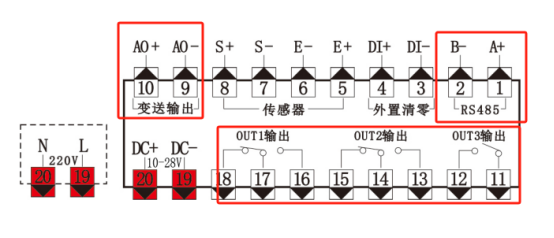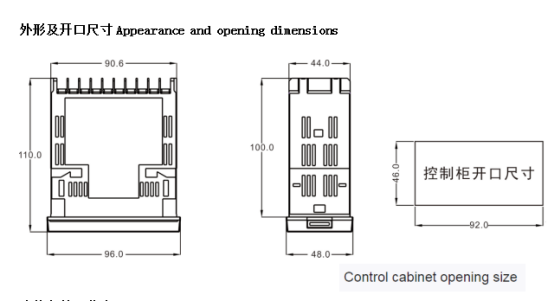
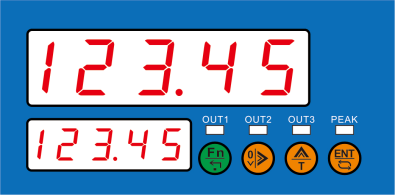
In the previous article, we introduced the basic features and wiring definitions of the SH-711 weighing control instrument. Today, we will discuss the highlight features of this instrument. When paired with sensors, it offers many user-friendly functions that can compensate for sensor limitations and address calibration challenges in on-site work environments.
Highlight 1: High-Speed Data Acquisition
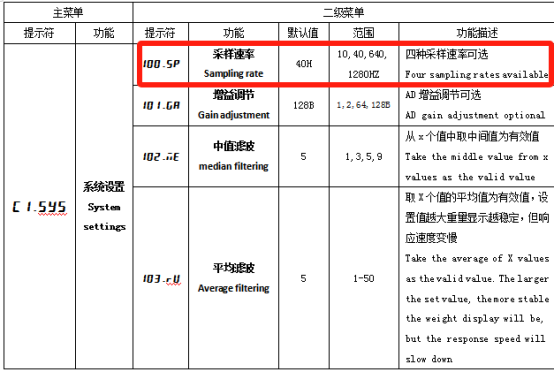
In certain applications of weighing sensors, high-speed data acquisition and display are essential. This instrument can enable such a function, achieving effective data acquisition rates of 640 times per second or 1280 times per second. This makes it well-suited for applications like impact force testing and collision force experiments.
This feature is highly practical and is currently widely used in university laboratories and specialized industries.
Highlight 2: Backup and Restore Calibration Parameters
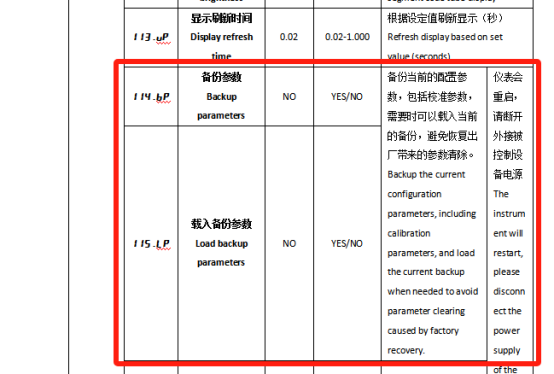
In scenarios where weighing instruments are used, weighing sensors are always present. If calibration is performed at the factory, the end customer can use the system seamlessly. However, on-site environments are often unpredictable, and unforeseen factors can cause calibration data to become inaccurate.
To address this, the 114 and 115 functions of the SH-711 instrument come into play:
- During the factory calibration process, manufacturers can access the 114 interface and save backup parameters. This action stores all calibration data in the instrument’s memory.
- If data distortion or inaccuracy occurs on-site, the user can simply enter the 115 interface and restore the backup parameters with one click, achieving factory-level calibration accuracy.
This feature is especially useful for scenarios involving large-tonnage sensors, where on-site calibration is challenging. It provides an effective solution to this problem.
Highlight 3: One-Click Factory Reset
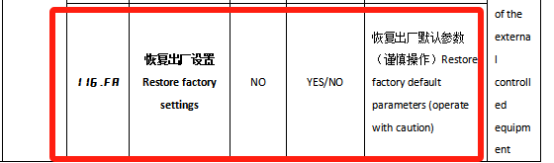
For distributors of weighing instruments, it is common to demonstrate operational interfaces to customers. However, frequent modifications of various functions during demonstrations can lead to parameter misconfigurations, causing the instrument to malfunction.
To prevent such issues, after completing a demonstration, users can access the 116 interface and perform a one-click factory reset to restore the instrument to its original settings.
This feature is also applicable in on-site environments. If workers with varying skill levels accidentally misconfigure or tamper with the instrument, resulting in inaccurate data, the factory reset function can resolve the issue efficiently.
Highlight 4: Addressing Sensor Creep Issues
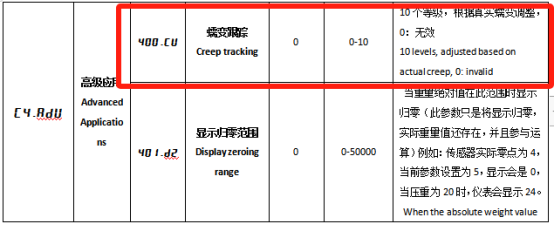
The performance of sensors can vary significantly, and when connected to the instrument, unstable zero points may arise. This can result in the displayed values gradually increasing or decreasing, which is caused by sensor creep problems.
The SH-711 instrument provides a parameter adjustment option in the 400 interface to eliminate data distortion or erratic fluctuations caused by sensor creep defects.
This feature is exclusive to high-end weighing instruments and reflects the advanced capabilities of the SH-711.
In summary, the SH-711 weighing control instrument offers a combination of high-speed data acquisition, backup and restore calibration, factory reset capabilities, and sensor creep compensation. These features not only enhance the usability of the instrument but also address common challenges in real-world applications, making it a reliable and user-friendly solution for diverse industries.
Shijiazhuang Touchda Technology Co., Ltd.
Office
May 7, 2025